




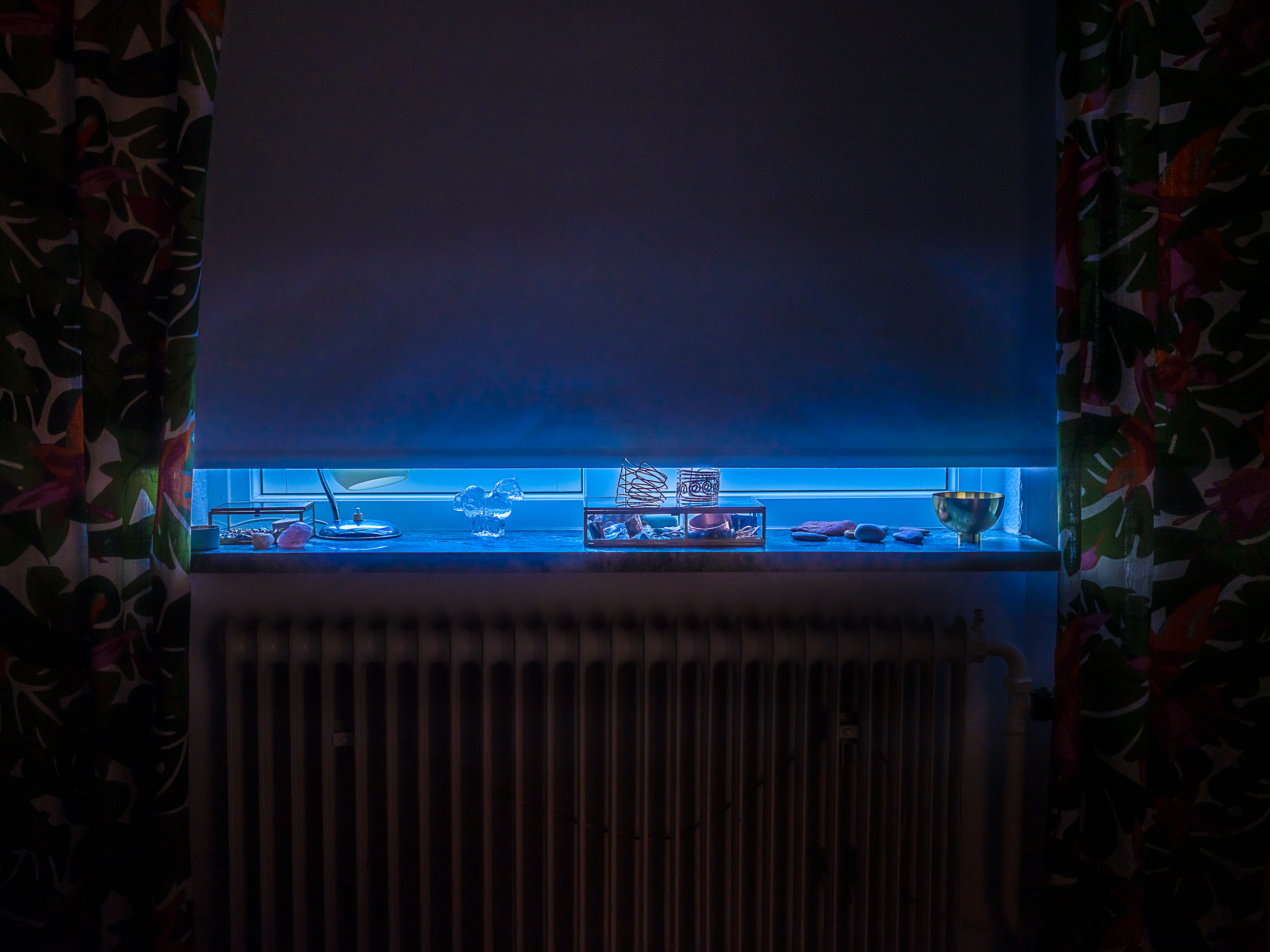


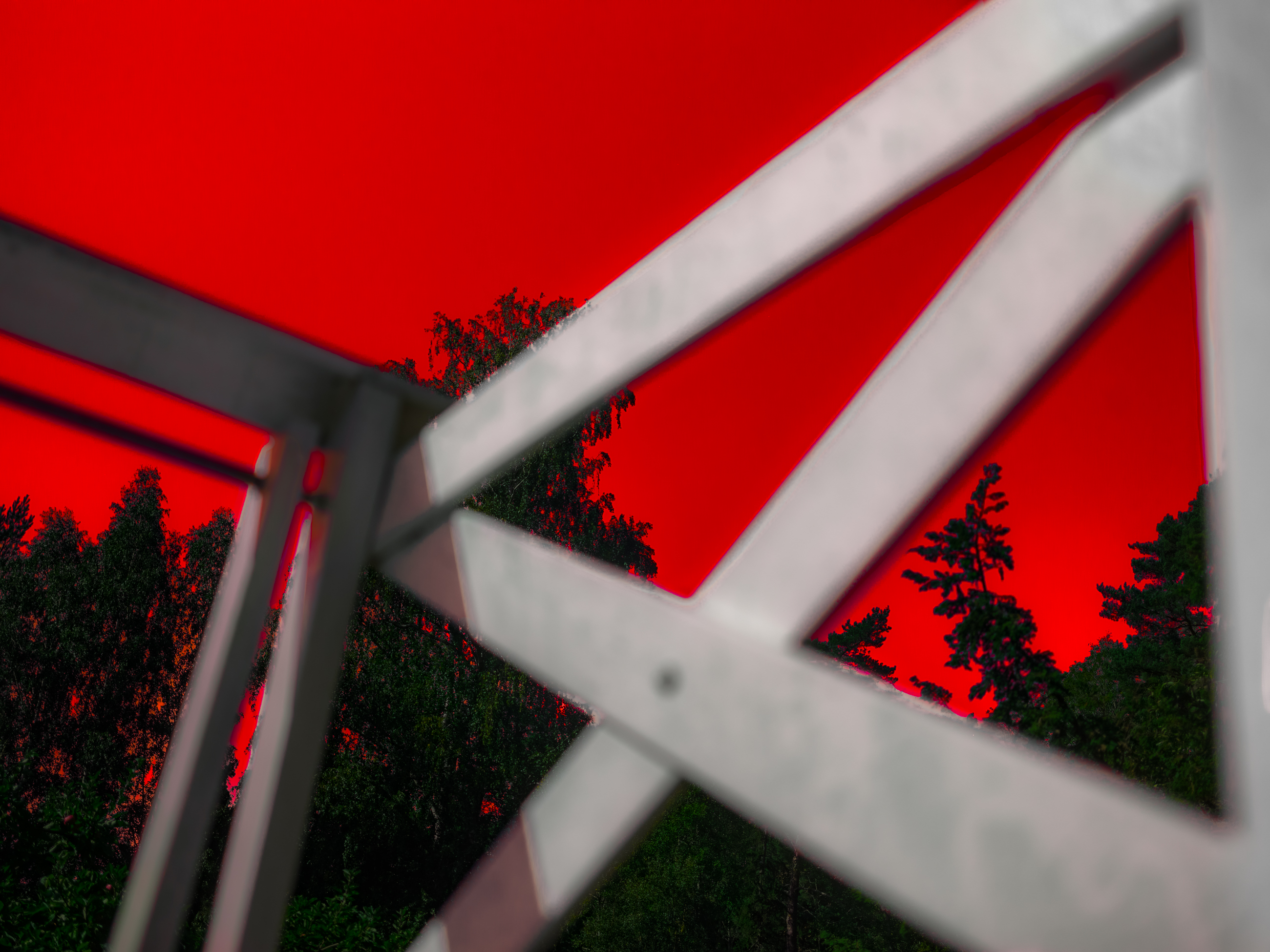

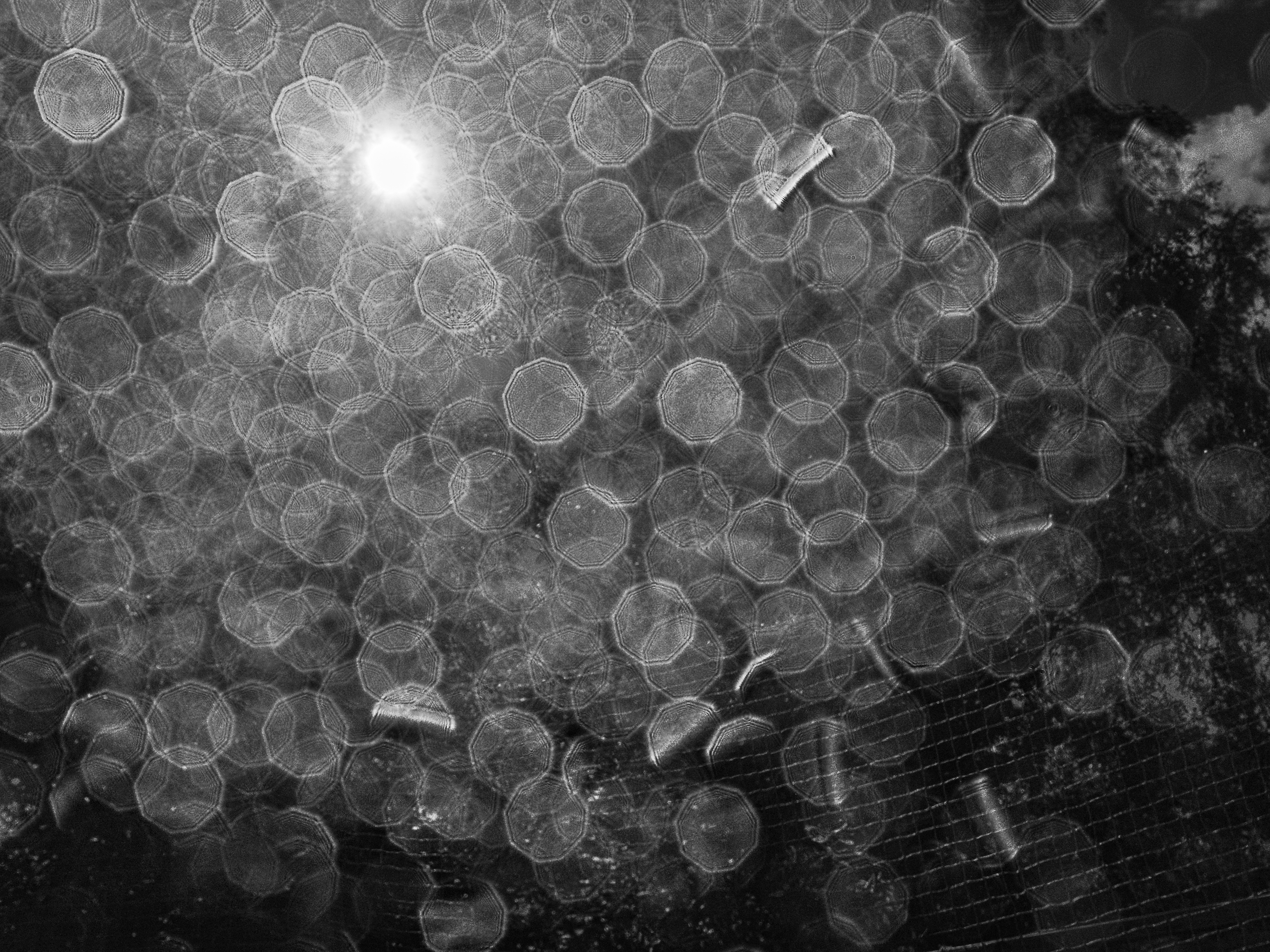
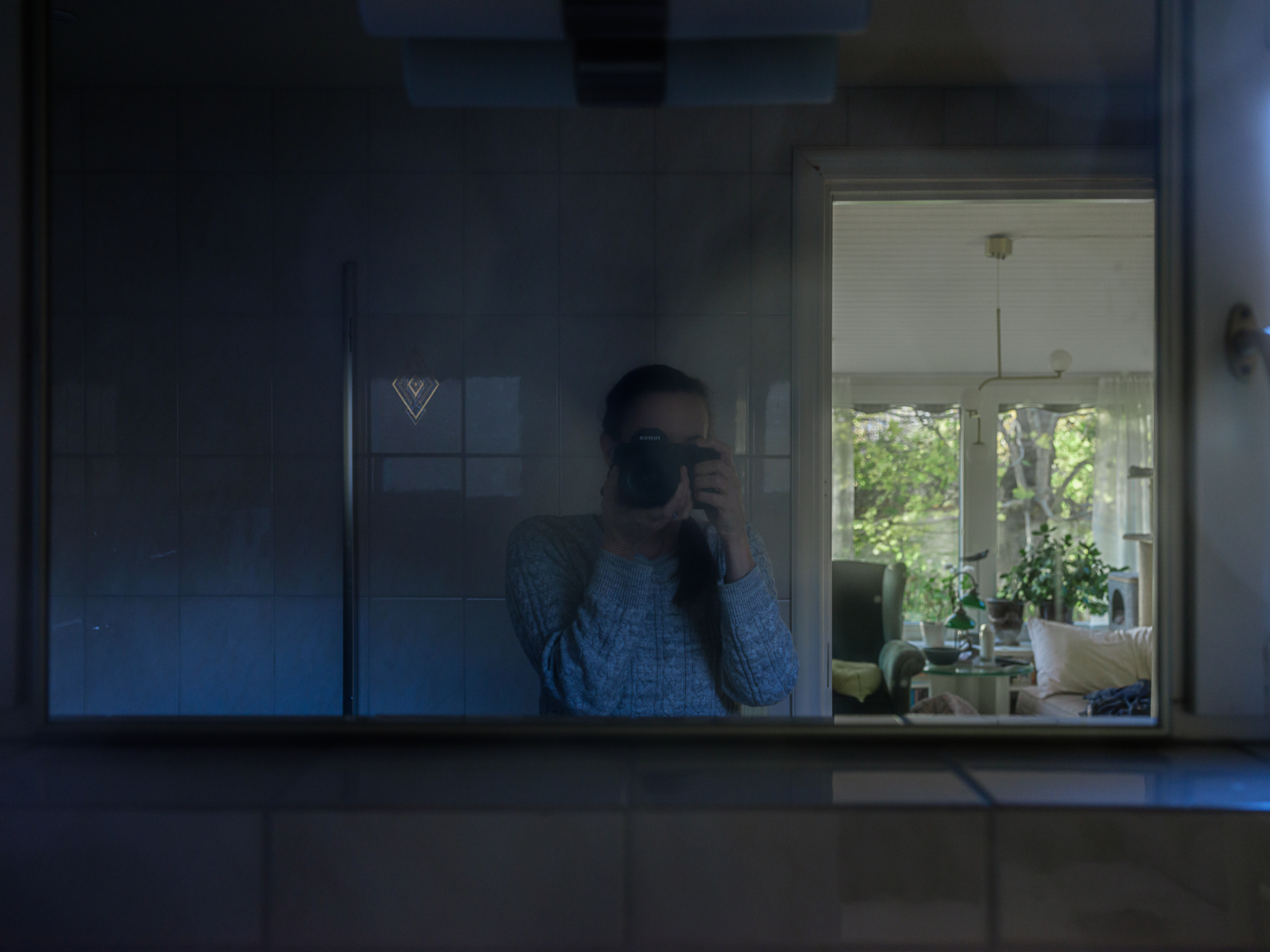

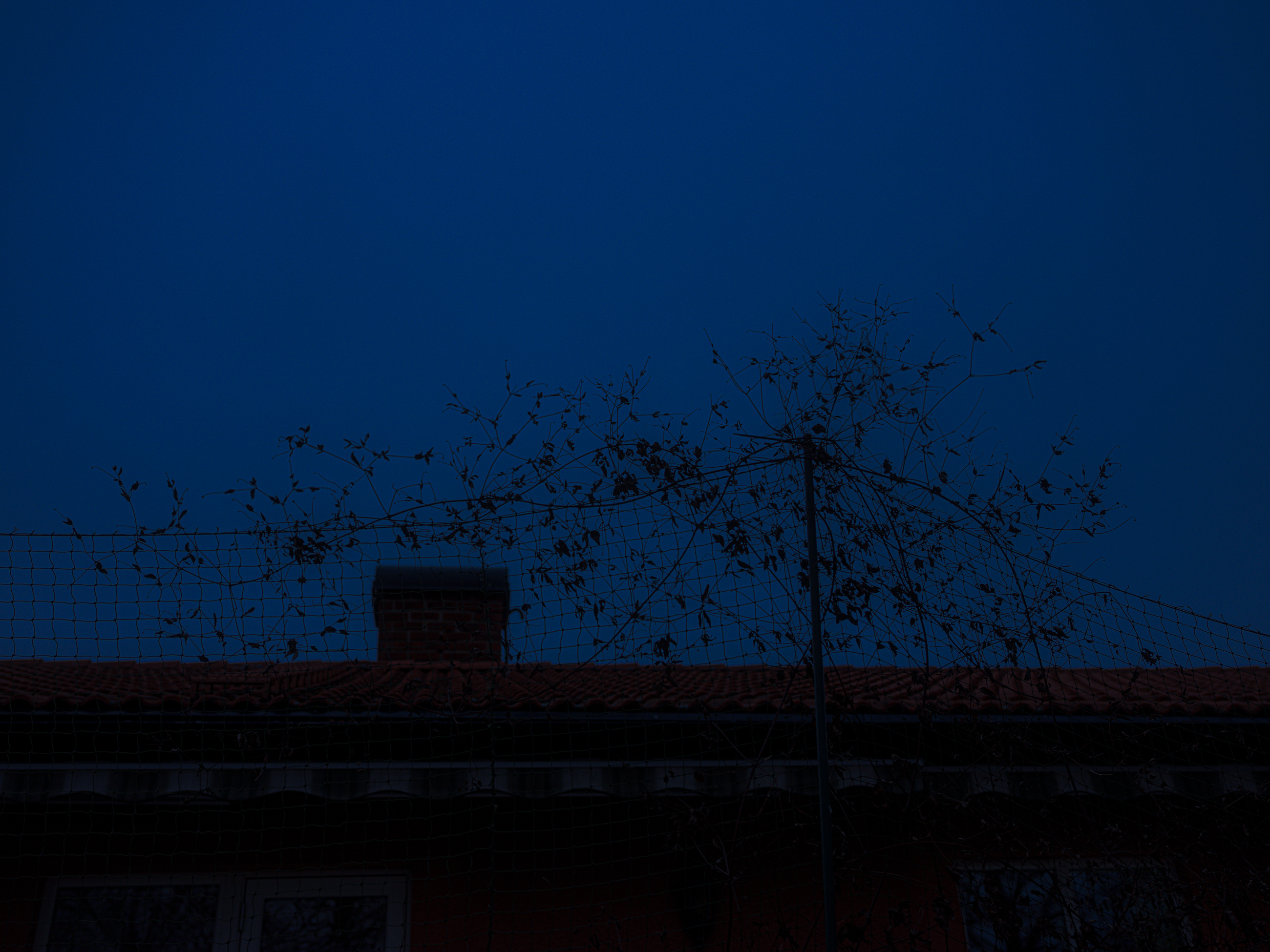
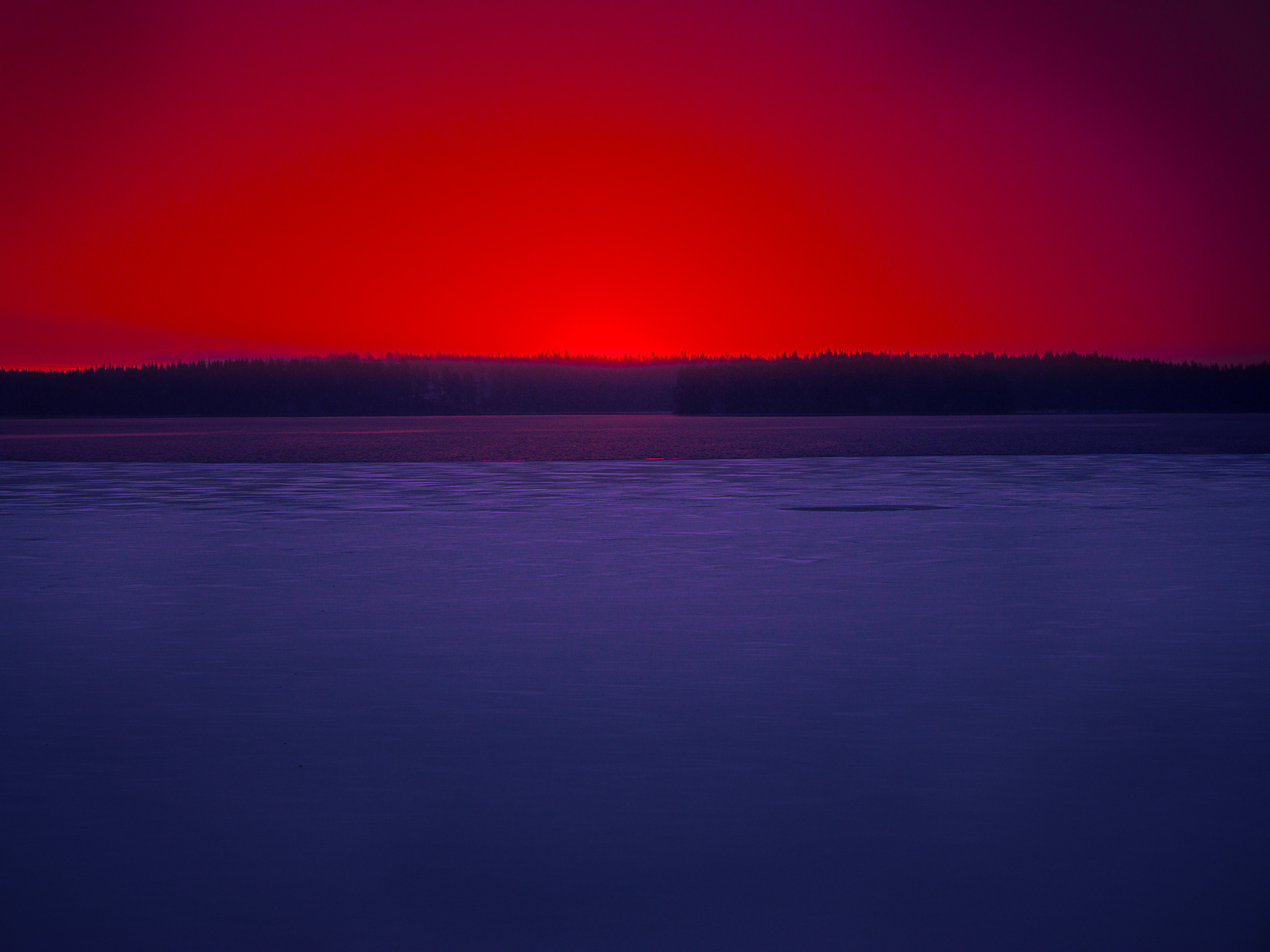
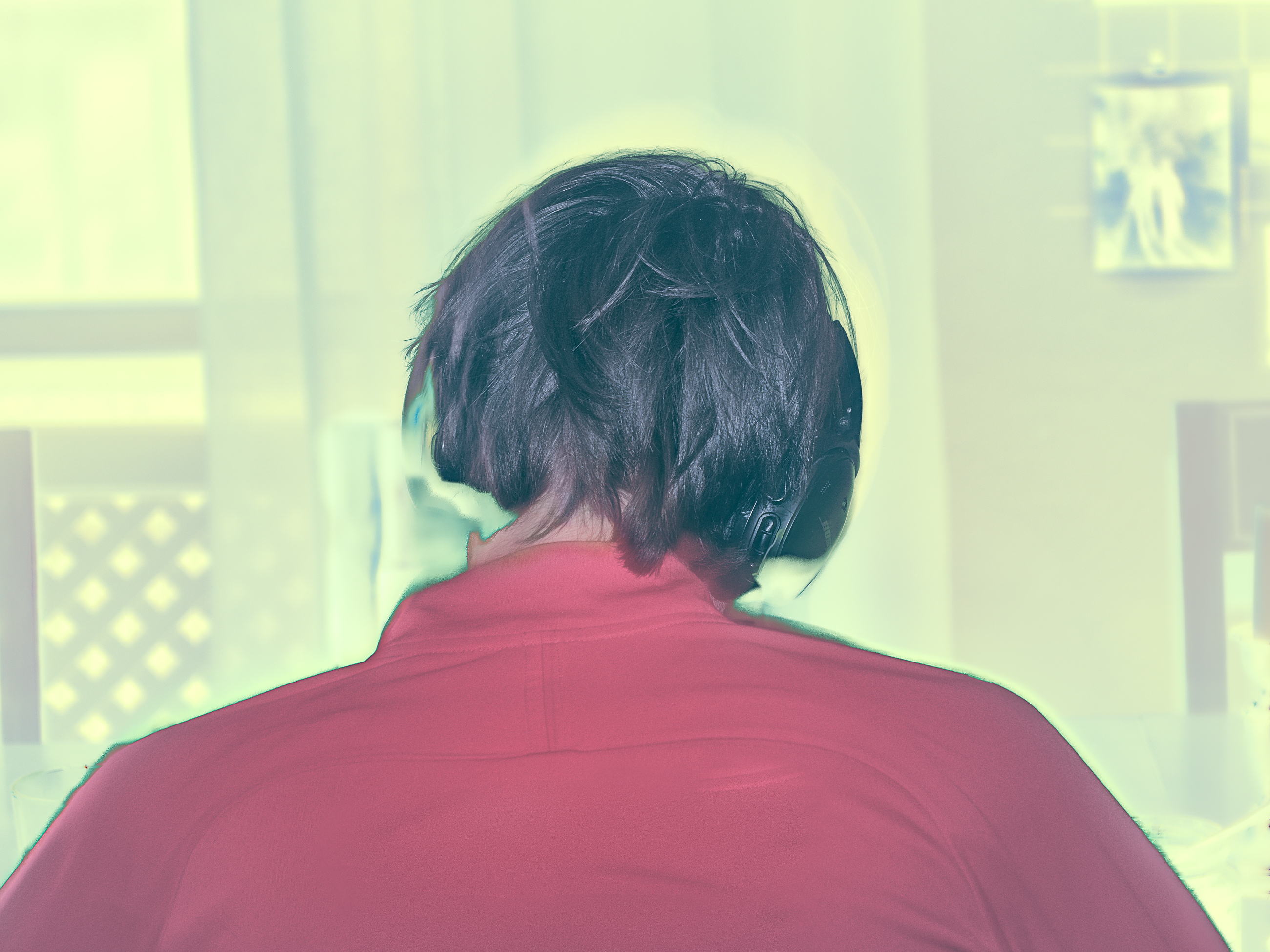


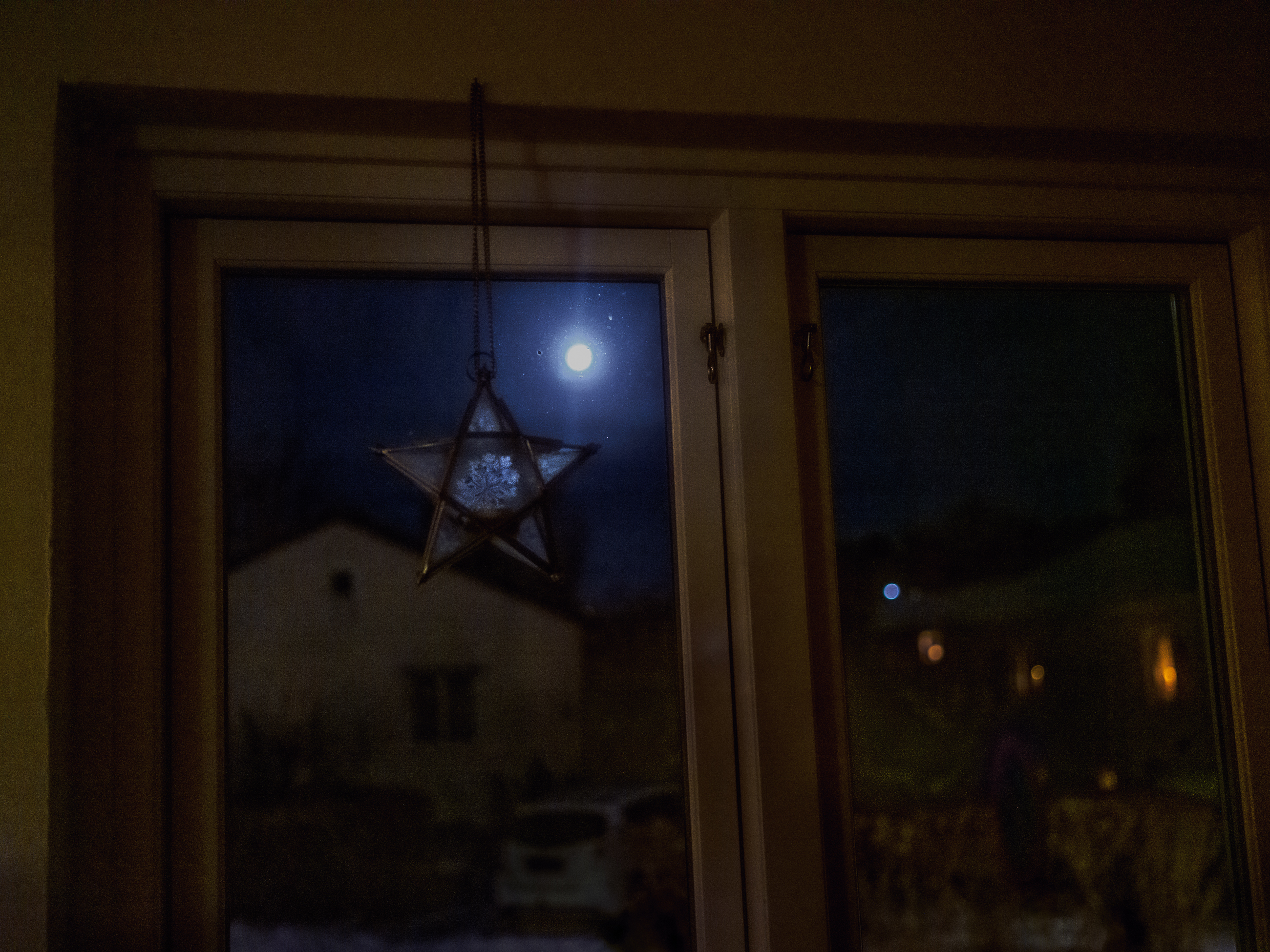
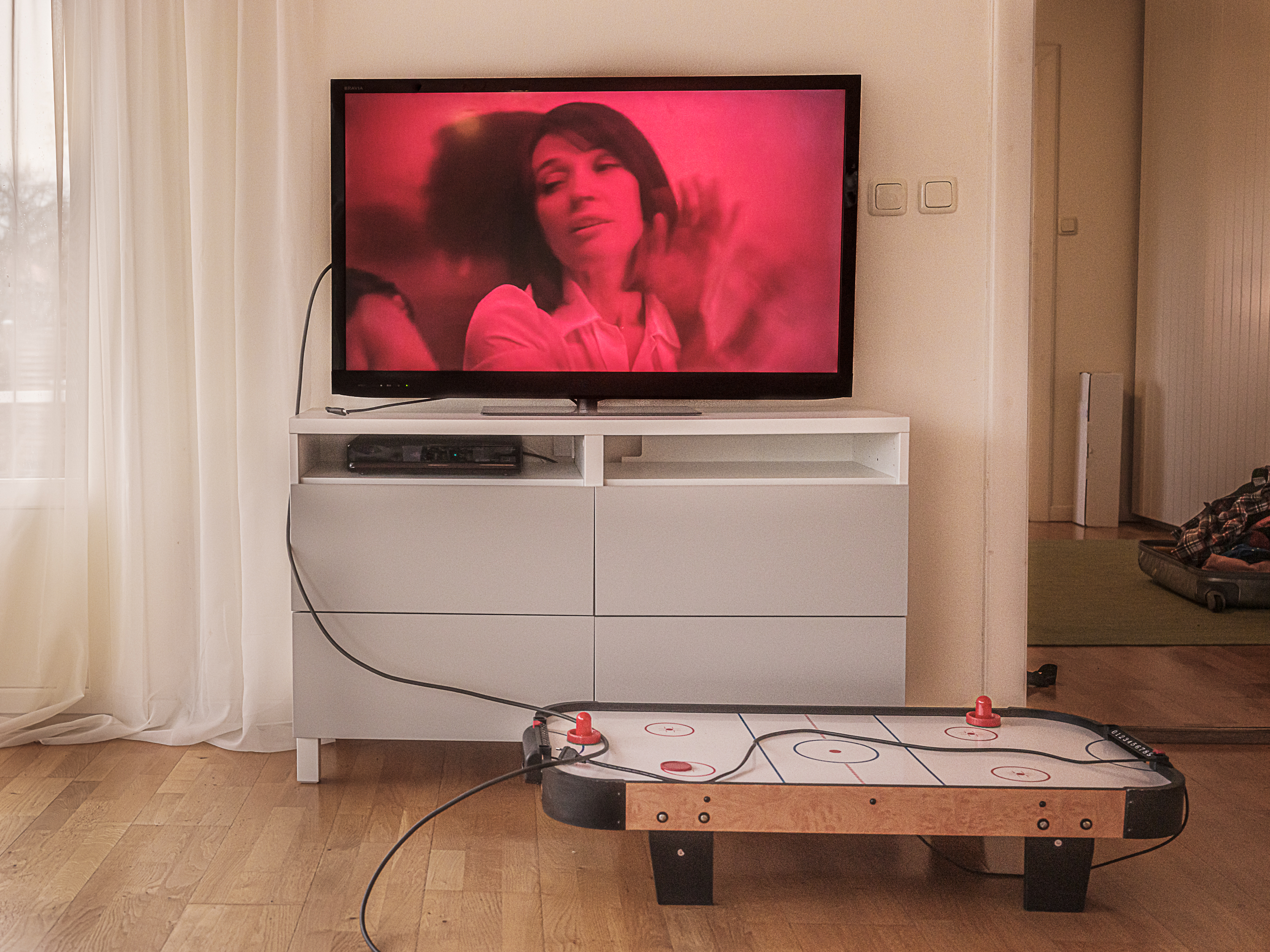





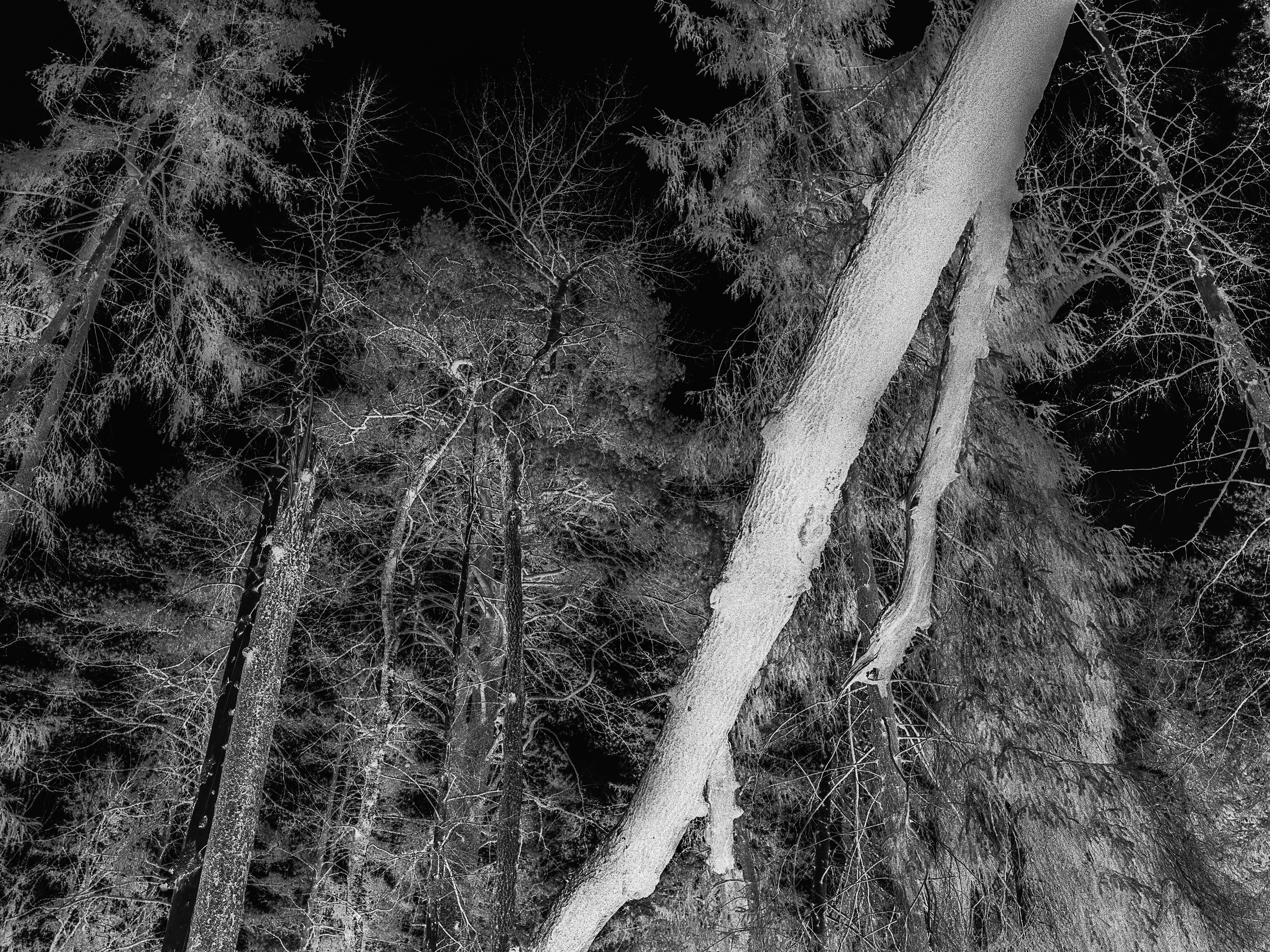
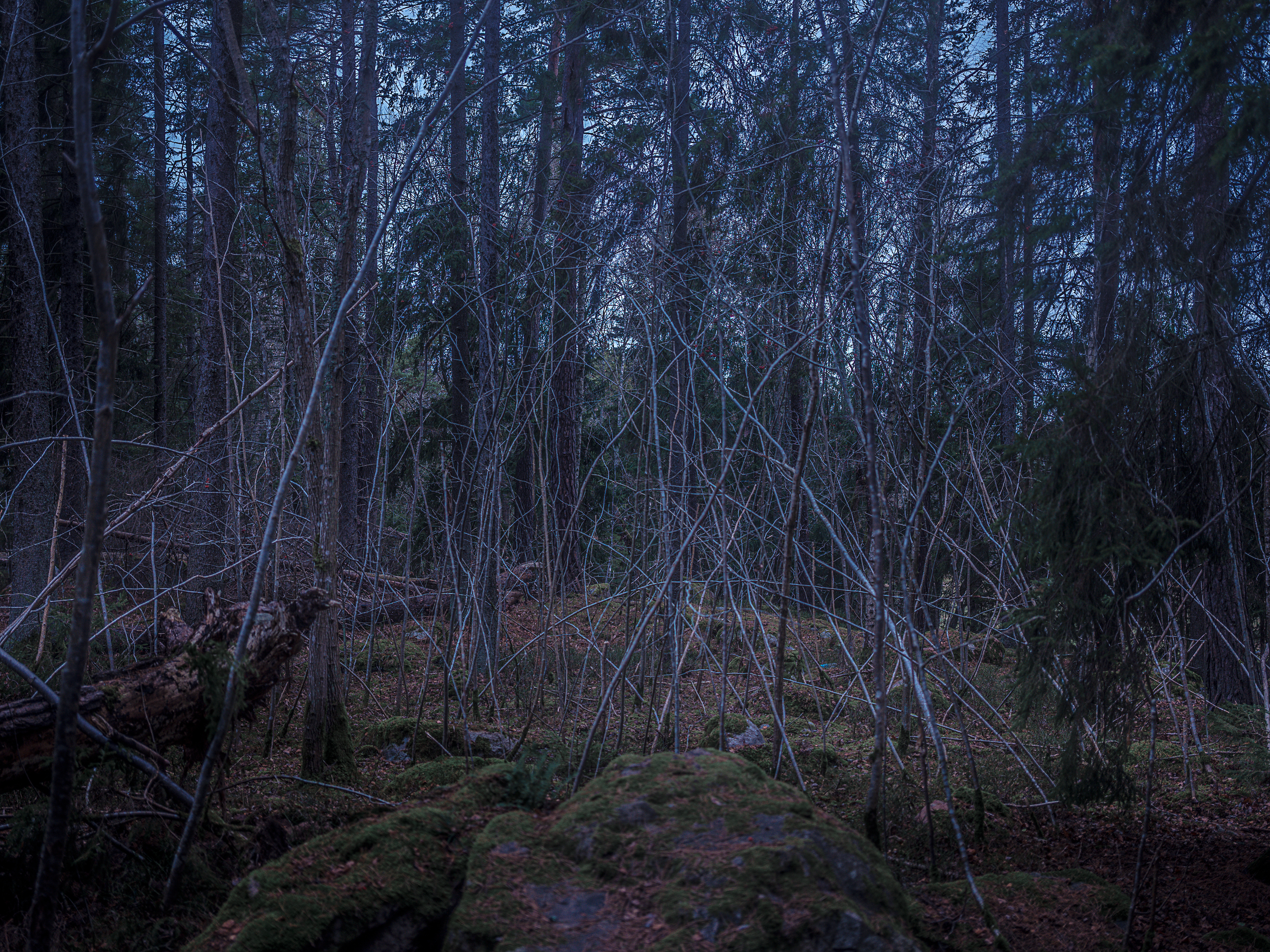
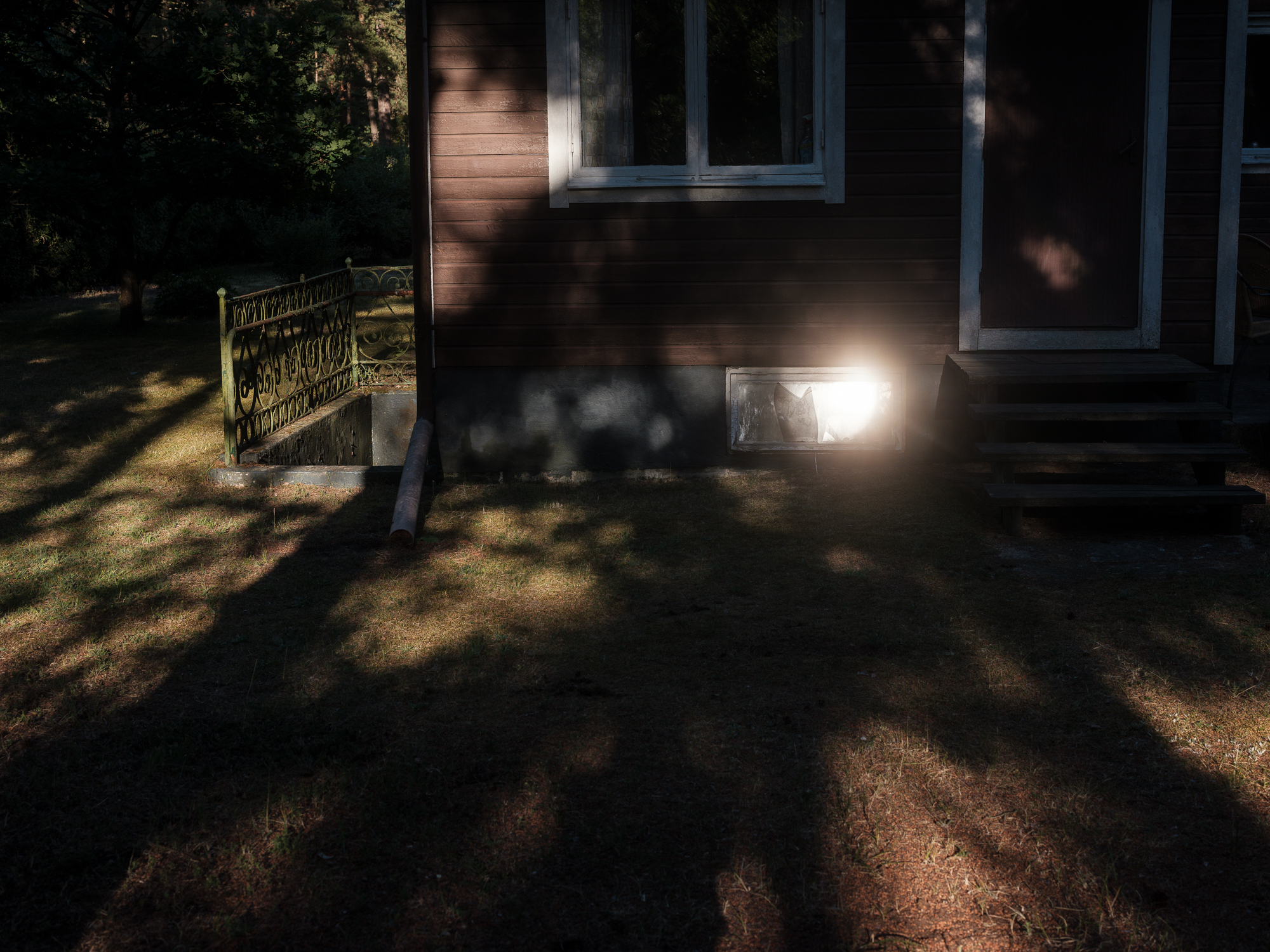

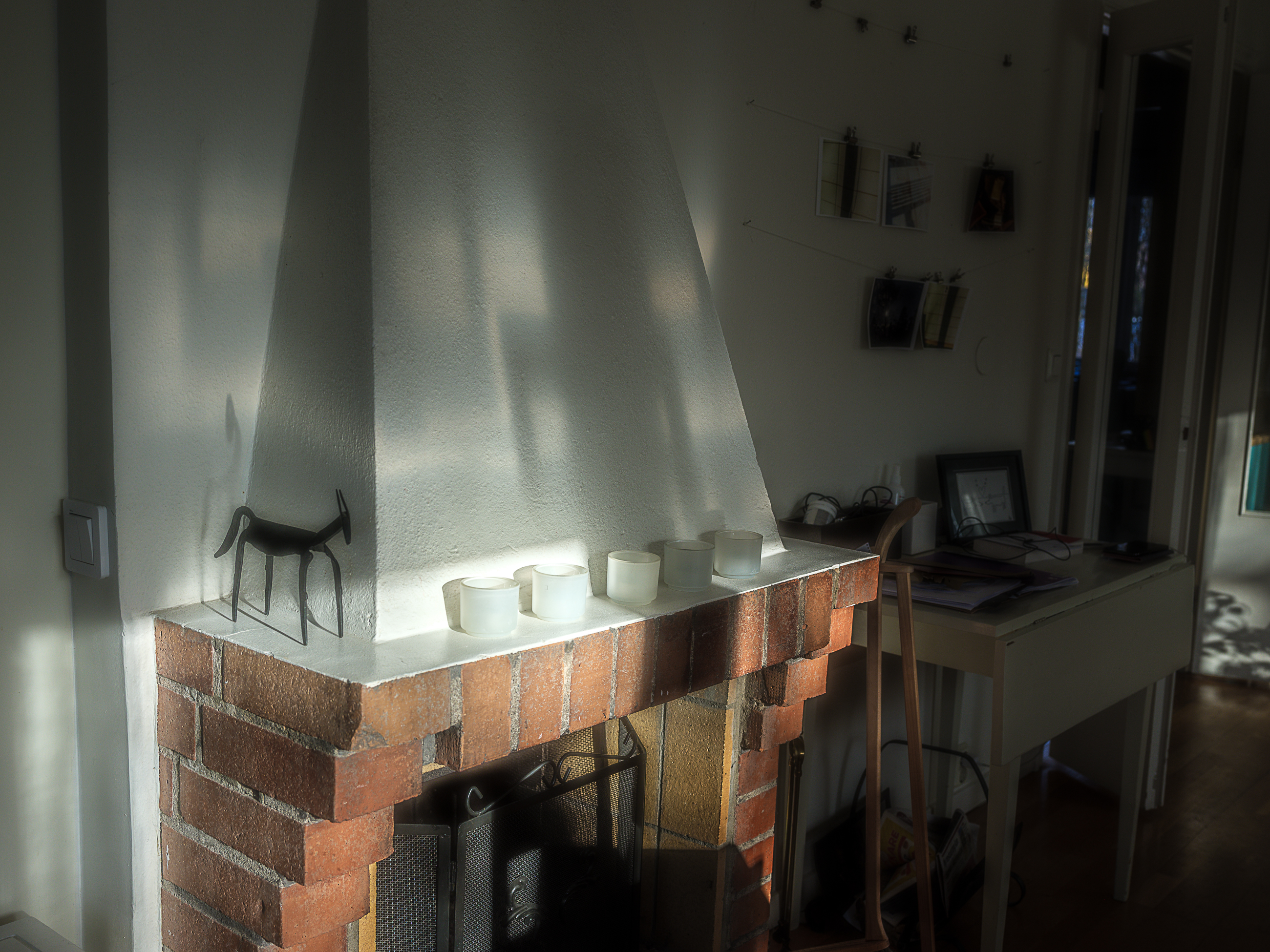
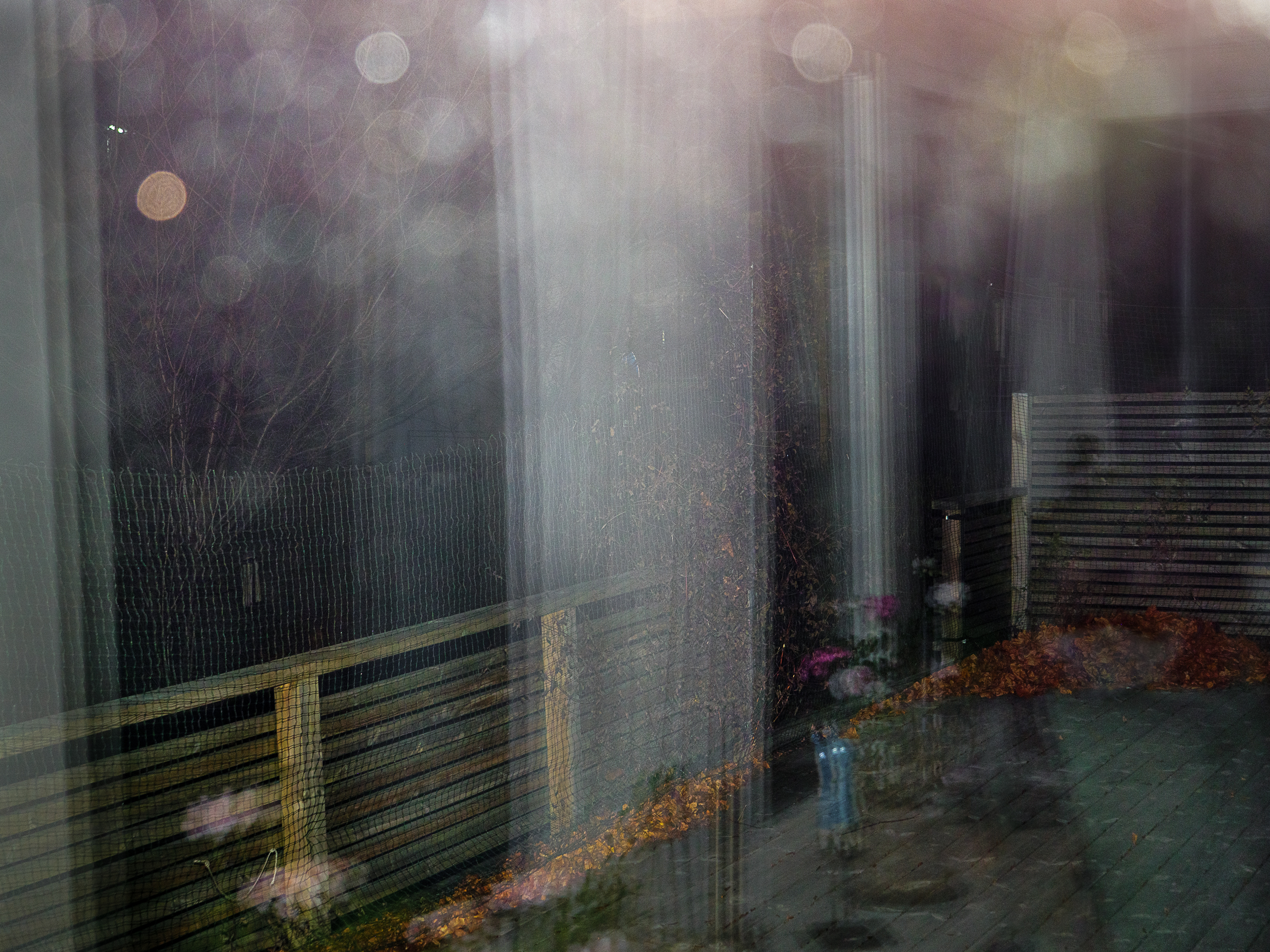
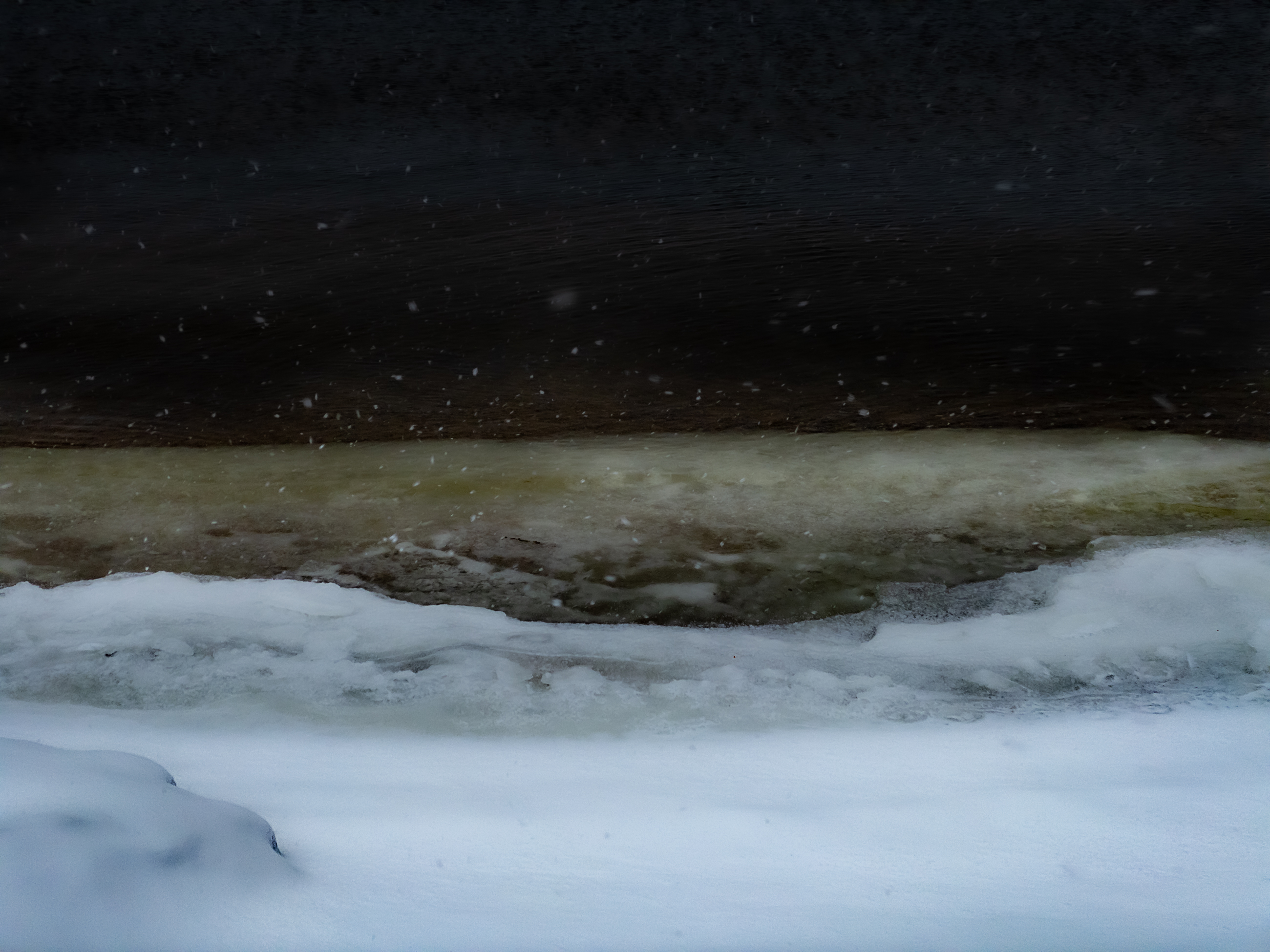
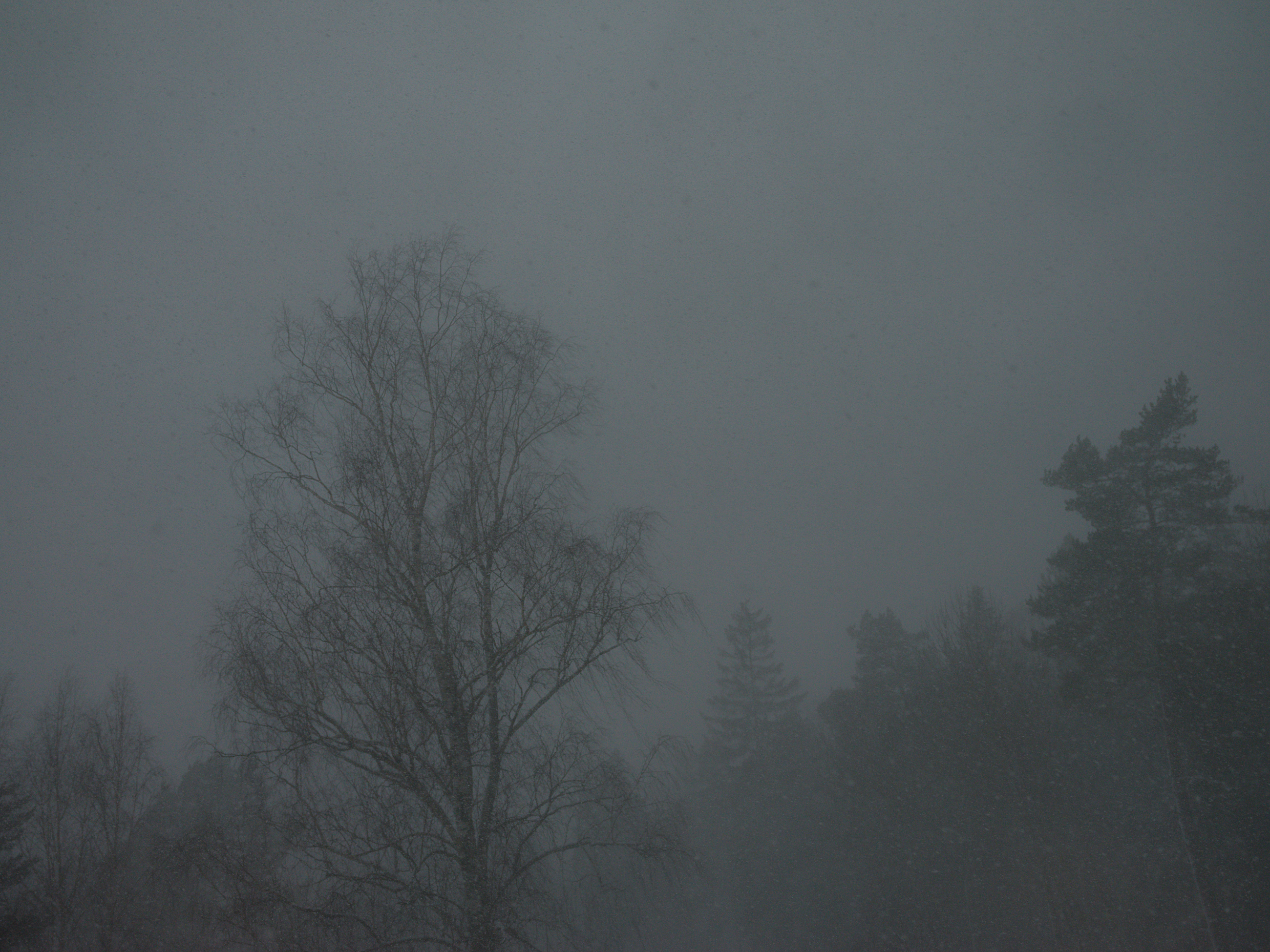
I look around. I see a table, a computer screen, a glass of wine, a window, and trees outside the window. I hear the wind outside moving through the branches. All these things and phenomena exist at a distance and on a scale that allows me to perceive and relate to them.
If a tree falls outside the window, I perceive—through sight—the particles of light reflecting off the tree as it falls, and—through hearing—the vibrations of air molecules as the tree crashes to the ground. If I bring the glass to my mouth, the molecules of the wine come into direct contact with my senses of smell and taste.
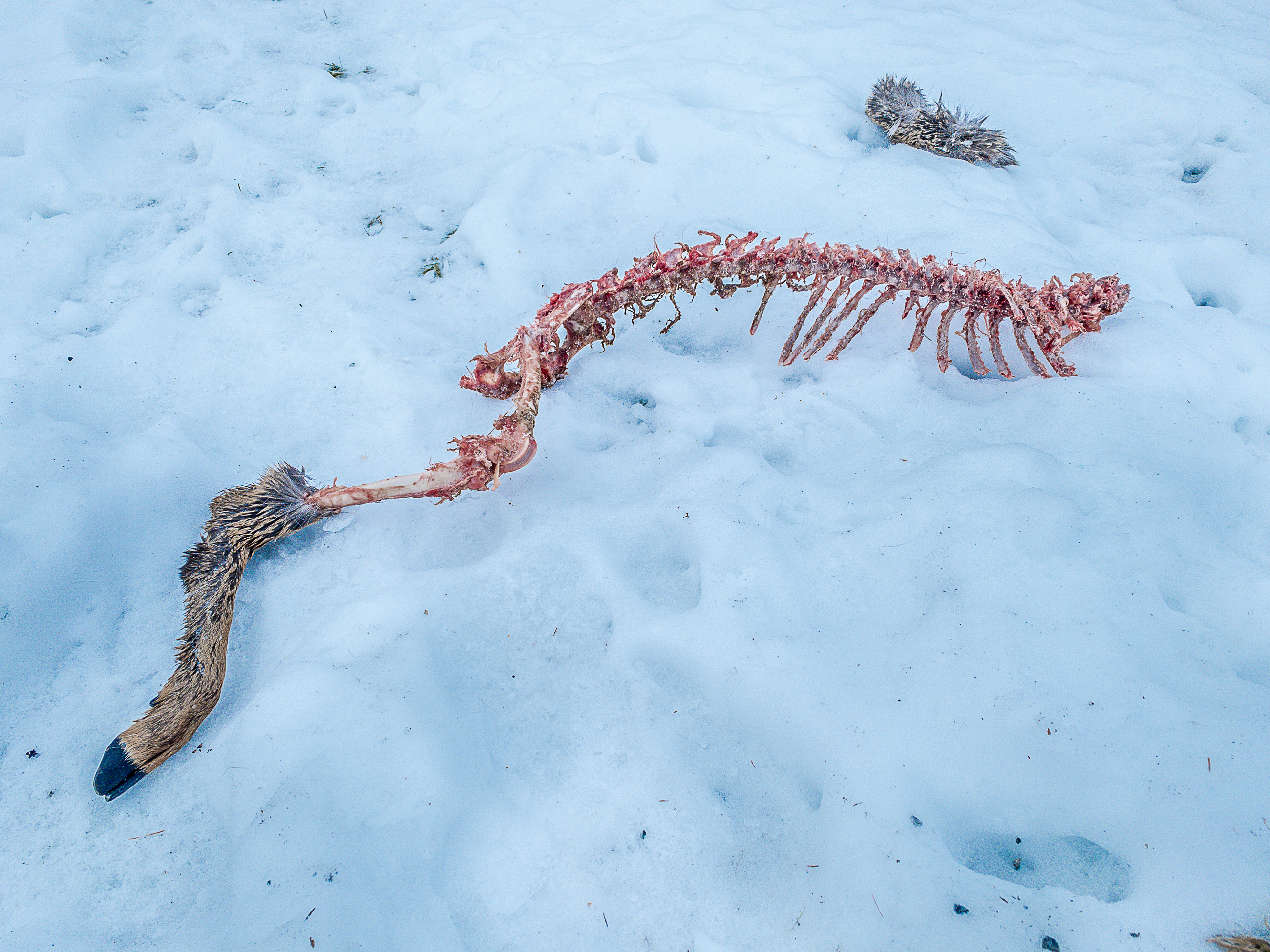
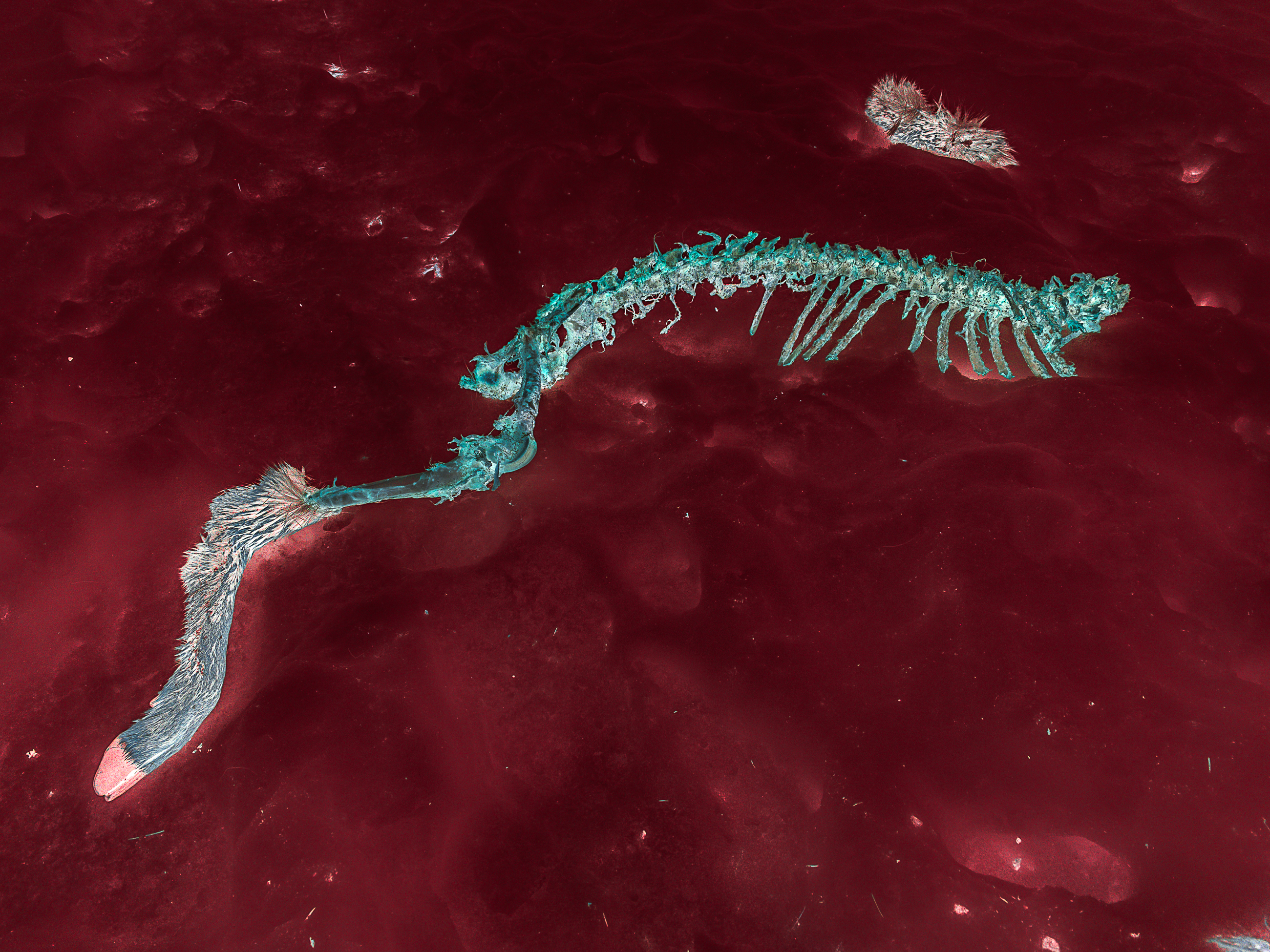
Beyond our perceptible world, other realities unfold. But these realities lie beyond our reach. Our senses are limited to a narrow range, and everything outside it remains inaccessible to us.
Down into the very smallest—into the domain of Planck lengths. That which forms the foundation of all our reality: time and space, the smallest particles of the universe in a trembling dance. What takes place there—a world so far removed from our own—particles binding together, transforming, emerging, and vanishing.
We cannot access this most fundamental realm with our senses; we cannot make contact with it or experience it directly. Through the language of mathematics, we are given clues—but can we ever truly understand, attain deep insight, and feel a sense of grounding? An existential paradox: that which we and our world are made of lies beyond the reach of our senses.
Out into the vastness of the largest, where a galaxy is but a trivial grain in a cosmos where galaxy clusters follow upon galaxy clusters. These clusters, in turn, are gathered into superclusters—our measures of distance fall short, light-years flicker past one another. We lack the capacity to truly grasp that beyond these immense voids there exist real objects and events, which to us appear only as shimmering points and spectra through telescopes and instruments.
In infinite numbers, the smallest constituents give rise to the largest structures. Vast quantities of particles, which in turn connect to further unimaginable numbers, give rise to a teeming and indistinct complexity.
The complexity itself—and the sheer scale—exceeds what our senses can take in and what our brains can process. Of necessity, we blur the world, making it more comprehensible by grouping, simplifying, approximating.
By extracting properties from large numbers of particles—properties that are, in reality, averages of individual states—we make the world more understandable to ourselves. The price we pay is a veil between us and reality.
We live our lives, with all that entails, on the outskirts of the Laniakea supercluster, where our Milky Way is one among a hundred thousand other galaxies. These galaxies, in turn, consist of billions of suns like our own. We are born of the cosmos: the cells of our bodies, everything we perceive around us—all built from atoms once forged in the hearts of stars.
From structures assembled out of these smallest building blocks we arise: complex systems that have evolved over millions of years—structures that, at some point in the course of time, became aware of their own existence and developed senses to perceive a fragment of the world around them.
(2025)
 Alexandra Elevant